
I Need More Leads - Then I Can Sell More!!!!!!
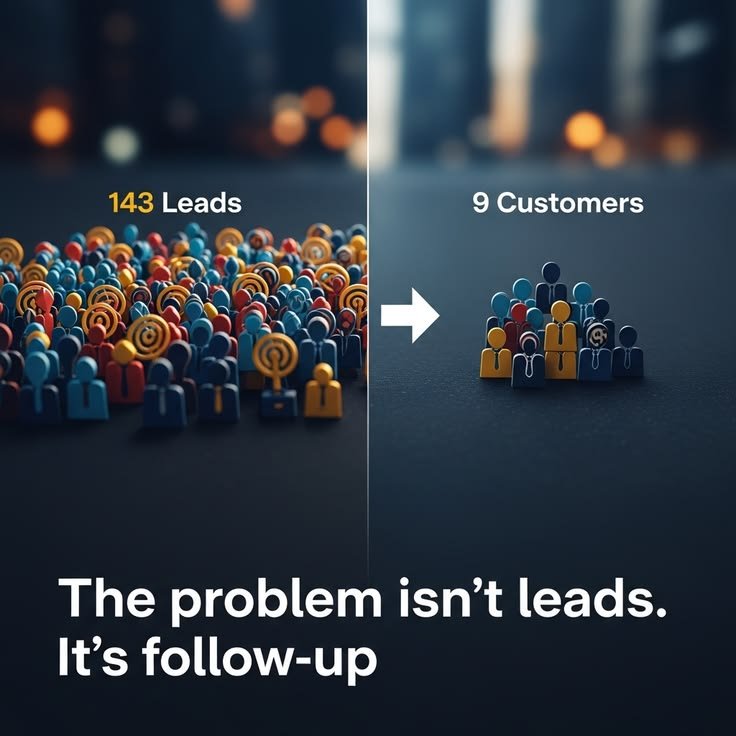
This is one of the most common beliefs in sales. It sounds logical on the surface. More enquiries should mean more sales. But in reality, this thinking is flawed. In most businesses, leads are not the problem. The real issue is what happens after the lead comes in.
If you are already receiving enquiries but not converting them into customers, more leads will not fix the problem. It will only increase the volume of missed opportunities. Growth does not come from more traffic. It comes from better execution. And execution comes down to two core skill sets: conviction and product knowledge.
These two skills determine how well you convert opportunities into revenue. Not marketing. Not lead generation. Not volume. If you want to sell more, you need to understand and improve these two areas first.
The Real Problem Is Not Leads It Is Conversion
Most businesses default to the same response when sales slow down. They assume they need more leads. More traffic, more enquiries, more quote requests. The belief is simple. Increase opportunity and sales will increase.
But when you analyse the numbers, the issue becomes clear. Most businesses already have enough leads. The failure point is conversion. Leads are coming in, but they are not being turned into customers consistently. That is not a marketing problem. It is a sales problem.
If you cannot convert 10 leads, you will not convert 100. You will simply lose more opportunities at scale. This is why increasing lead volume without fixing conversion only increases wasted spend and inefficiency.
Conviction Is 80 Percent of the Sale

Conviction is the most important skill in sales. It is not confidence in your ability. It is belief in your offer. It is the certainty that what you are selling is the right solution for the customer.
When conviction is strong, everything changes. You present pricing without hesitation. You handle objections without panic. You position value clearly. You control the direction of the conversation. Customers respond to certainty, not uncertainty.
When conviction is weak, it shows immediately. Discounts are offered too quickly. Price becomes a problem instead of value being the focus. Competitors are treated as threats rather than alternatives. The result is lost control of the sale.
Conviction drives approximately 80 percent of the outcome because it determines how the customer experiences the interaction. If conviction is missing, nothing else performs properly.
Product Knowledge Supports the Sale It Does Not Drive It
Product knowledge is the second critical skill, but it is secondary to conviction. It is not what closes the sale. It is what supports it. It gives structure to your conviction and allows you to communicate value clearly and confidently.
Most business owners think they understand their product. In reality, they only understand it at a surface level. Customers today are highly informed. They research competitors, pricing, and solutions before they ever speak to you.
That means when they engage with your business, they are not looking for basic explanations. They are looking for clarity, authority, and differentiation. Strong product knowledge allows you to answer objections, explain value, and position yourself against competitors without hesitation.
Without conviction, product knowledge becomes ineffective. You end up over explaining, justifying, and losing control of the conversation. With conviction, product knowledge becomes powerful and supports consistent conversions.
Why More Leads Will Never Fix a Weak Sales Process
Increasing lead volume does not fix conversion issues. It only multiplies them. If your sales process is weak, more leads simply create more lost opportunities. This is why many businesses feel like marketing is not working when in reality the issue sits in sales performance.
A business converting at 10 percent does not fix itself by doubling leads. It simply doubles inefficiency. Real growth comes from improving conversion rates, not increasing traffic. This is the most overlooked lever in most businesses.
If you improve conversion from 10 percent to 20 percent, you double revenue without increasing marketing spend. That is where real scalability happens. Not in chasing more leads, but in converting existing ones more effectively.