
DOES SEO TAKE TIME?
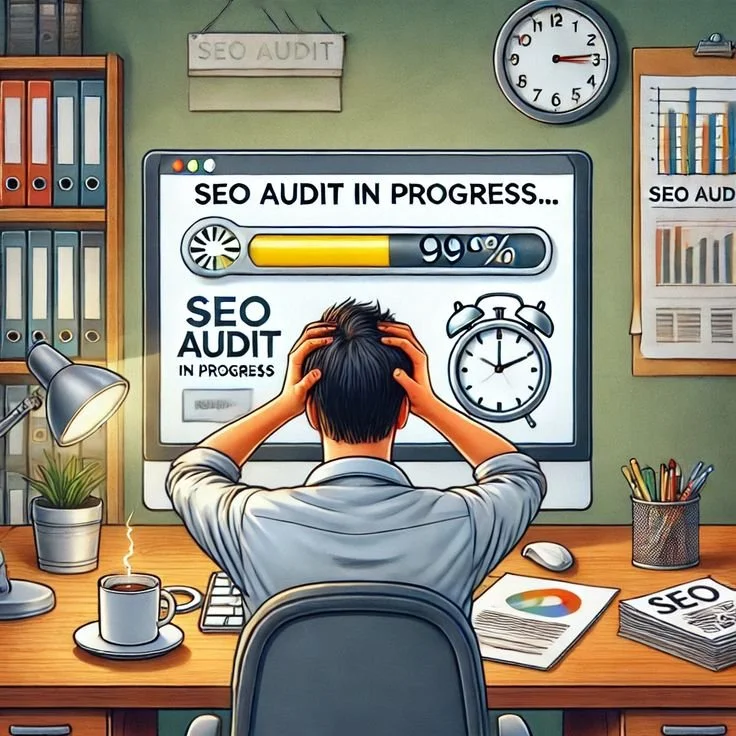
SEO is one of the most misunderstood disciplines in digital marketing.
Business owners often want immediate results. Agencies often promise fast improvements. But SEO does not operate on instant feedback loops like paid advertising.
The reality is simple.
SEO takes time because SEO is not a switch. It is a compounding system built on authority, trust, relevance, and data consistency.
The faster this is understood, the better the outcomes.
SEO Is Not a Reset Button
One of the biggest misconceptions in SEO Marketing is that every new campaign starts from zero.
It does not.
Search engines do not treat websites as blank slates every time a strategy changes or a new agency comes in. Instead, they evaluate a website based on accumulated signals over time.
These signals include:
Domain history
Backlink profile strength
Content relevance and depth
User engagement behaviour
Technical performance
Brand search demand
This means SEO is not a reset every time another company takes over.
It is a continuation of the domain’s existing reputation.
Even if an SEO strategy changes, the underlying authority of the website remains part of the equation.
SEO Is a Reflection of Domain Strength
At its core, SEO is not just about optimisation tasks.
It is a reflection of how strong a domain is in the eyes of search engines.
Think of a website like a reputation score that is constantly being updated.
Strong domains tend to:
Rank faster for new content
Require fewer backlinks to compete
Recover quicker from algorithm updates
Maintain stability in rankings
Accumulate authority over time
Weak domains tend to:
Struggle to index new pages
Require heavy content and link investment
Fluctuate heavily in rankings
Take longer to build trust signals
This is why two businesses targeting the same keywords can experience completely different SEO timelines.
SEO is not just about what you do today. It is about what your domain has built over months or years.
SEO in Basic Terms Is Making Your Site Famous
A simple way to understand SEO is this:
SEO is the process of making your website more well known, trusted, and relevant within a specific industry.
In other words, SEO is about making your site “famous” in search engines for the right reasons.
But fame in SEO is not popularity in a general sense. It is structured authority.
Search engines reward websites that demonstrate:
Consistent topical expertise
High quality external references (backlinks)
Strong user engagement signals
Clear content relevance
Reliable technical performance
This is not something that happens overnight.
Fame in SEO is earned gradually through repeated signals of trust and relevance.

Why SEO Takes Time to Work
SEO takes time because search engines need time to observe patterns.
Google does not just rank a page because it exists. It evaluates how that page performs over time.
Key time based factors include:
1. Crawling and Indexing Delays
New content must be discovered, crawled, and indexed before it can rank consistently.
2. Trust Building
Search engines need repeated confirmation that a site is reliable and consistent.
3. Behavioural Data Collection
Click through rates, dwell time, bounce rates, and engagement patterns all take time to accumulate.
4. Authority Accumulation
Backlinks and brand mentions build authority gradually, not instantly.
5. Competitive Comparison
Your content is constantly being compared to existing ranking pages that may have years of historical strength.
SEO is therefore not delayed performance. It is progressive evaluation.
The Role of Competition in SEO Timelines
Another reason SEO takes time is competition.
You are not just optimising a website in isolation. You are competing against every other website targeting the same keywords.
In many industries, top ranking pages have:
Hundreds or thousands of backlinks
Years of content history
Strong brand recognition
High engagement metrics
Extensive topical coverage
To compete with this, new or weaker domains must build equivalent signals over time.
This is why SEO timelines vary significantly depending on industry competitiveness.
For example:
Local niche businesses may see movement within weeks or months
Highly competitive industries can take 6 to 18 months or more
SEO is relative. You are ranked against others, not against a fixed standard.
Why SEO Feels Slow at the Beginning
The early stages of SEO often feel slow or invisible.
This is because most foundational work does not immediately translate into rankings.
Early SEO work typically includes:
Technical fixes
Site structure improvements
Keyword mapping
Content planning
Internal linking optimisation
These actions are essential but not immediately visible in rankings.
They are building the foundation, not the outcome.
The visible growth phase usually comes later once enough authority and relevance signals have accumulated.
SEO Growth Is Exponential, Not Linear
One of the most important concepts in SEO Marketing is that growth is not linear.
It is exponential.
Early stages may show slow progress, but once authority builds, results can accelerate quickly.
This happens because:
Strong domains amplify new content faster
Existing authority boosts keyword rankings
Internal linking strengthens topical clusters
Backlink acquisition becomes easier
Brand searches increase trust signals
This compounding effect is what makes SEO one of the highest ROI marketing channels over time.
However, it only works when consistency is maintained.
Why Many Businesses Misunderstand SEO Timelines
Many business owners misjudge SEO because they compare it to paid advertising.
Paid ads provide:
Immediate visibility
Immediate traffic
Immediate data
SEO provides:
Delayed visibility
Compounding traffic
Long term data accumulation
This difference leads to unrealistic expectations in the early months.
Another common misunderstanding is expecting SEO to behave like a fixed project with a start and end date.
In reality, SEO is an ongoing system of optimisation and improvement.
The Importance of Consistency in SEO
Because SEO takes time, consistency is critical.
Search engines reward websites that show ongoing activity and improvement.
Consistent SEO efforts include:
Publishing relevant content regularly
Improving existing pages
Acquiring high quality backlinks
Monitoring technical performance
Optimising based on data insights
Inconsistent SEO efforts often result in stalled or unstable rankings.
SEO is not about doing a lot once. It is about doing the right things repeatedly over time.
How SEO Companies Should Explain Timeframes
One of the responsibilities of SEO Companies is setting realistic expectations.
A professional approach should always include:
Clear timelines based on competition level
Transparent explanation of early stage work
Focus on leading indicators before rankings
Emphasis on commercial outcomes rather than vanity metrics
If an SEO provider promises instant results or guaranteed rankings, it usually indicates a misunderstanding of how search engines actually evaluate authority.
SEO requires time because trust cannot be rushed.
When SEO Starts to Show Real Results
SEO typically begins to show meaningful commercial impact once:
Content starts ranking across multiple keywords
Organic traffic becomes consistent
Conversion data becomes stable
Domain authority strengthens
Multiple pages begin contributing to leads or sales
This is the point where SEO shifts from being an investment to becoming a growth engine.
But this stage is only achieved through sustained effort over time.